
 Enquire
 Call us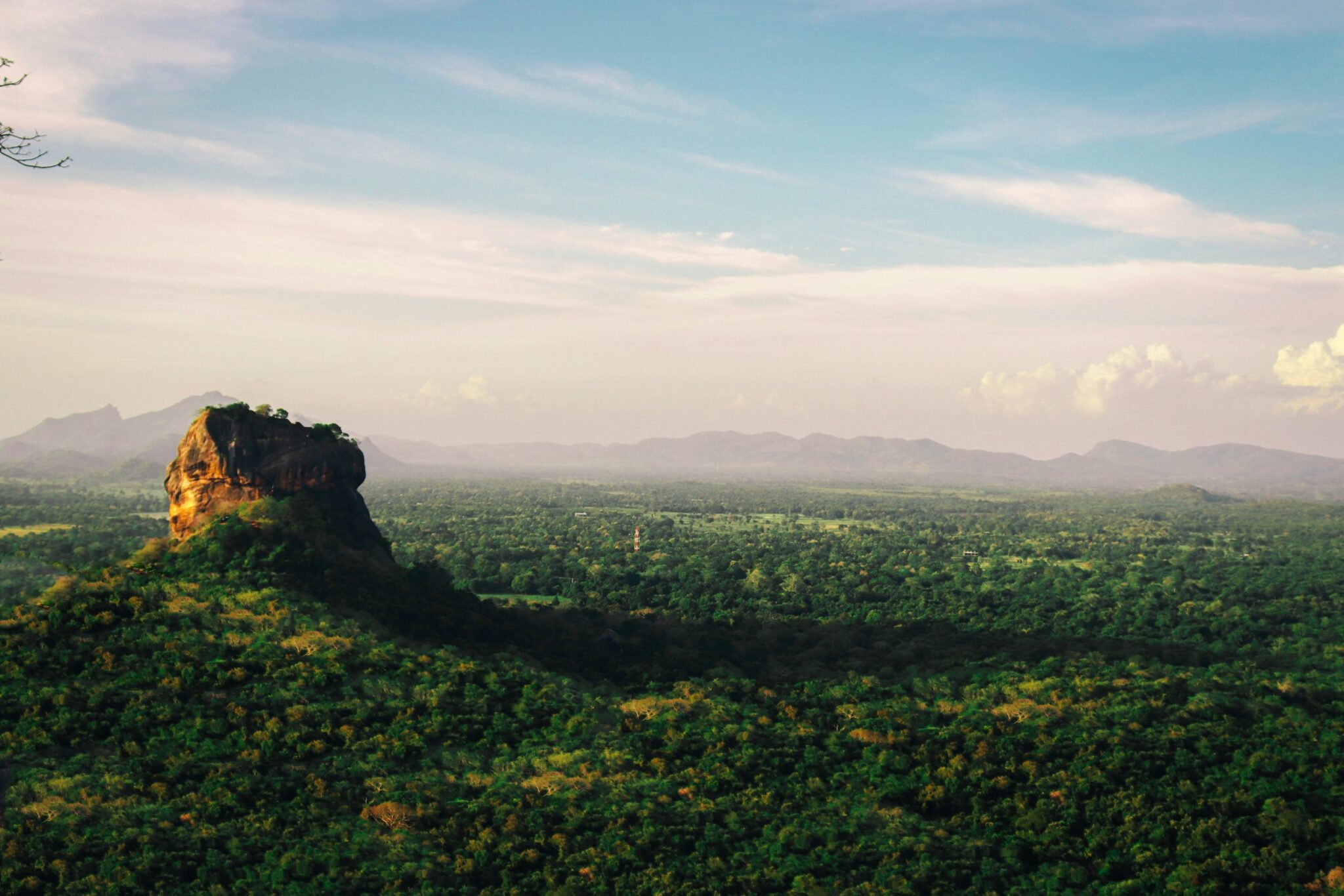
A Complete Guide to the Cultural Triangle
5th November 2025
Highlights of Sri Lanka’s Cultural Triangle
Ancient cities, sacred sites, and living heritage
At the heart of Sri Lanka lies a landscape shaped by kings, monks, and centuries of devotion – a region where history, art, and faith intertwine. Known as the Cultural Triangle Sri Lanka, this area forms a geographic link between Anuradhapura, Polonnaruwa, and Kandy, and is home to some of the island’s most important UNESCO World Heritage Sites. Within this triangle lie royal palaces, rock fortresses, monasteries, and cave temples that date back over 2,000 years. From towering stupas to ancient citadels, it tells the story of a civilisation that flourished long before the world arrived to admire it.
Today, the Cultural Triangle of Sri Lanka remains the cultural and spiritual heart of the island – a must-see for anyone interested in archaeology, architecture, and living heritage. This region forms the centrepiece of many Sri Lanka Cultural Triangle tours, combining history, adventure, and scenery in one journey. Travellers often base themselves around Dambulla, Sigiriya, or Habarana, where excellent hotels make it easy to explore each site at a comfortable pace. Those travelling with children may wish to read our dedicated guide to Family Holidays in Sri Lanka, for family-friendly insights into visiting this region.

Sigiriya Rock Fortress, Sri Lanka
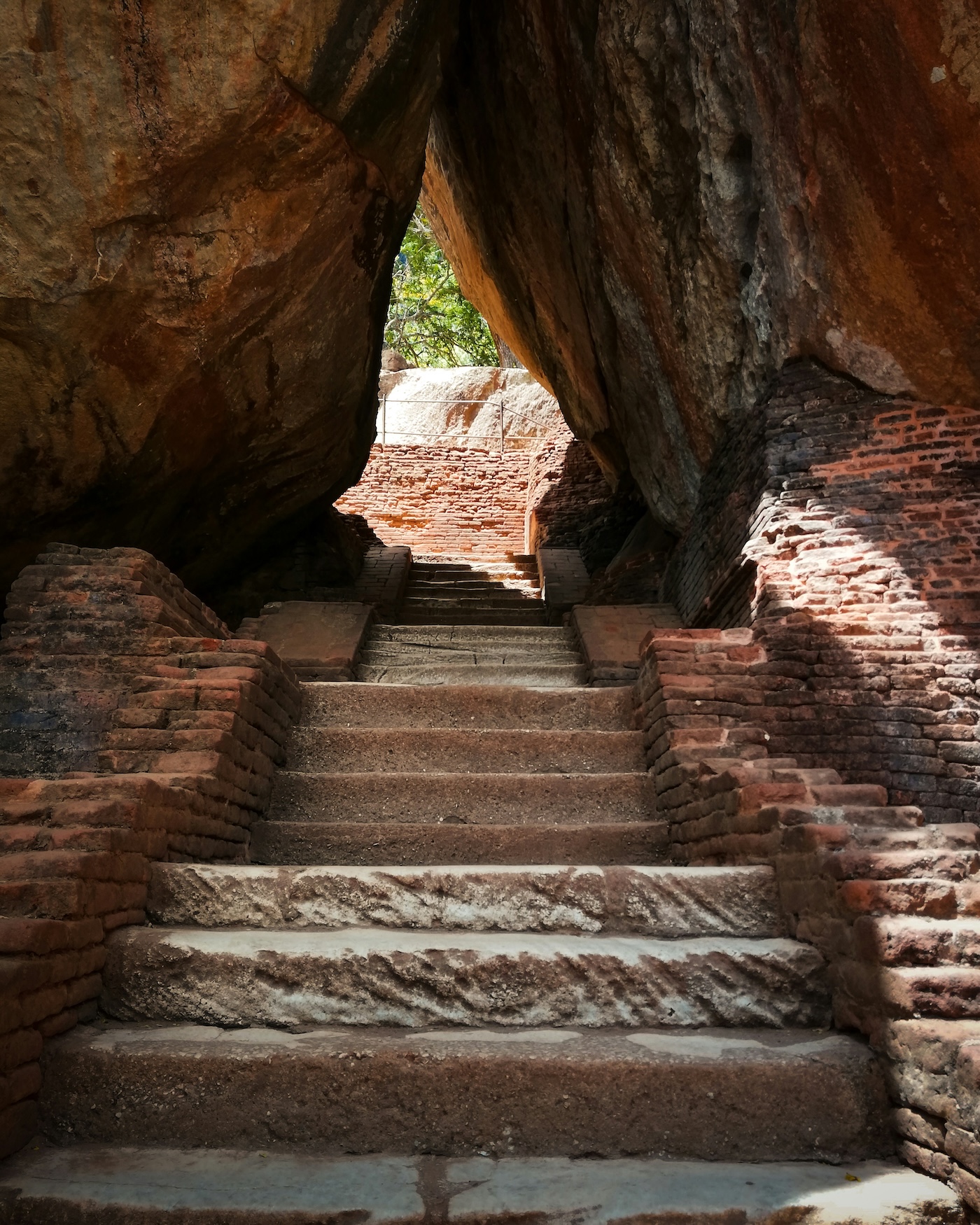
Perhaps the most iconic landmark in Sri Lanka, Sigiriya Rock Fortress rises nearly 200 metres above the plains. Built in the 5th century by King Kashyapa, it was once a royal citadel and now stands as a UNESCO World Heritage Site of remarkable artistry and ambition. The ascent follows roughly 1,200 steps, divided into sections with shaded rest areas and platforms offering panoramic views.
The climb usually takes 45–60 minutes each way at a steady pace, making it suitable for most visitors with moderate fitness, including families with older children (around 6+ years is recommended). The route passes through landscaped water gardens, boulder gardens, and the famous mirror wall, before reaching the celebrated frescoes of celestial maidens painted high on the rock face.
The summit reveals the foundations of an ancient palace surrounded by vast forest – a breathtaking reminder of Sri Lanka’s royal ingenuity and one of the must-see stops on any Sri Lanka cultural itinerary.
Dambulla Cave Temples, Sri Lanka
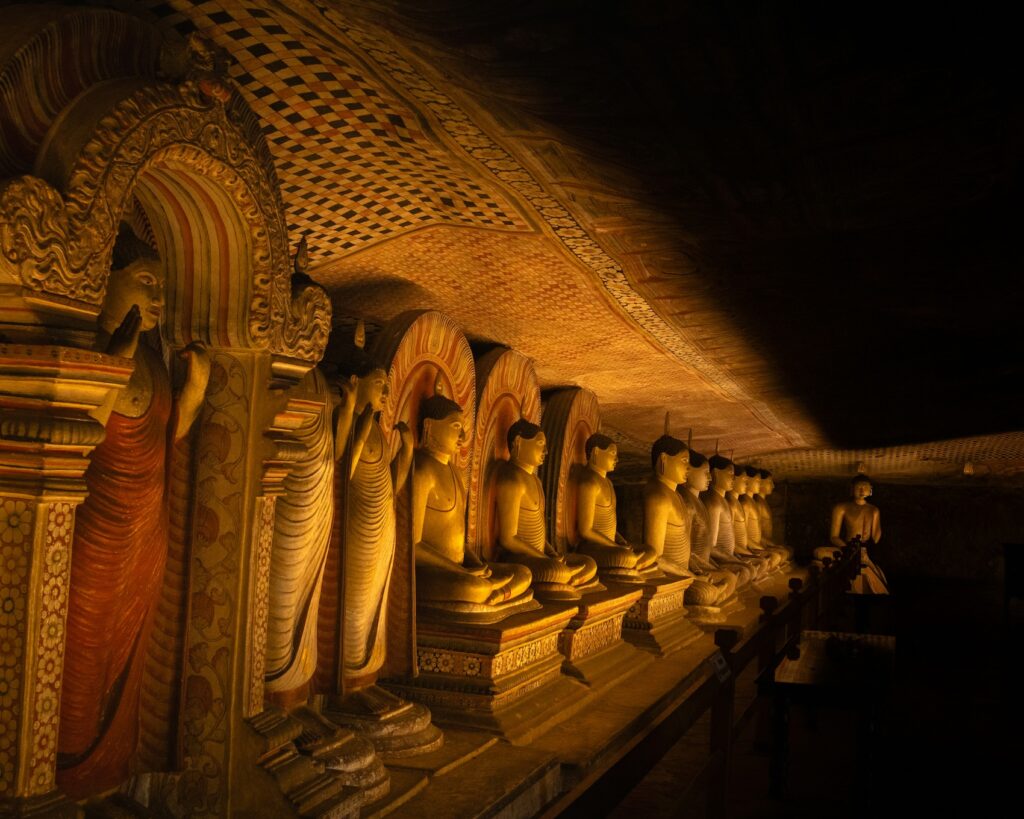
Just south of Sigiriya, the Dambulla Cave Temples form Sri Lanka’s largest and best-preserved temple complex. Carved into a vast granite outcrop, five main caves house over 150 golden Buddha statues and intricate murals illustrating scenes from Buddhist scripture. The short climb to the entrance takes about 10–15 minutes, with around 350 stone steps that can be a little steep but manageable for most visitors.
The temples are best visited early morning or late afternoon when the heat softens and local devotees arrive to light oil lamps and offer lotus flowers. Inside, the cool air and flickering light create a serene atmosphere filled with the scent of incense. Visitors are asked to remove shoes and cover shoulders and knees out of respect.
A visit here provides one of the most vivid insights into Sri Lanka’s living Buddhist heritage.

Anuradhapura and Polonnaruwa
The Ancient Cities of Sri Lanka
Two of the ancient capitals within the Cultural Triangle – Anuradhapura and Polonnaruwa – reveal the grandeur and devotion of Sri Lanka’s early kingdoms.
Anuradhapura, the island’s first capital, thrived for over a millennium. Its vast area is dotted with enormous stupas (dagobas) such as Ruwanwelisaya and Jetavanaramaya, peaceful temple ruins, and the Sri Maha Bodhi Tree, believed to have grown from a cutting of the original tree under which Buddha attained enlightenment more than 2,000 years ago. Exploring by bicycle or private car allows visitors to cover more ground, as the city’s sacred sites are spread over several kilometres.
Polonnaruwa, established later, offers a more compact and easily navigable layout – ideal for half-day exploration. Highlights include the Gal Vihara, where four colossal granite Buddha statues display different postures of serenity and enlightenment. The city’s well-preserved temples, palace ruins, and bathing pools evoke an era of great architectural achievement. Both sites combine peaceful atmosphere with archaeological depth, making them essential for understanding Sri Lanka’s cultural evolution.
Mihintale
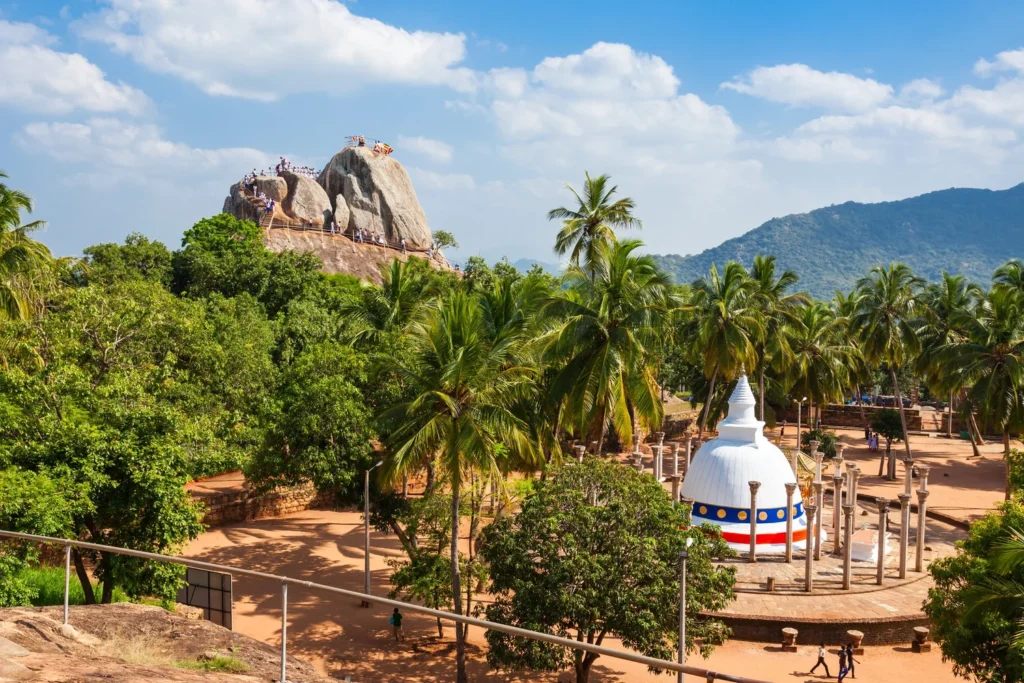
A short drive from Anuradhapura lies Mihintale, regarded as the birthplace of Buddhism in Sri Lanka. It was here, in the 3rd century BC, that the monk Mahinda met King Devanampiya Tissa, introducing the teachings of the Buddha to the island.
The site is a series of shrines and stupas set across a wooded hillside, reached by a climb of around 1,800 stone steps. The ascent, though steep in places, is punctuated by shady terraces and resting points, and can be completed in about 30–40 minutes.
At the top, visitors are rewarded with sweeping views over the northern plains and the white domes of Mihintale’s main stupas. It’s a peaceful, spiritual site – less visited than Sigiriya or Dambulla – and offers a tranquil counterpoint to the grandeur of the ancient capitals. Sunrise or late afternoon are the most rewarding times to visit, when the light softens and the air cools.

Experiences Beyond the Ruins
Exploring the Cultural Triangle is not only about monuments. The surrounding countryside invites travellers to slow down and connect with daily life. Take a guided village walk or cycling tour through rice paddies and rural hamlets, where farmers still work the land using traditional methods. Families can join hands-on activities such as cooking a simple curry over a wood fire or learning to weave palm leaves with local artisans.
For a different perspective, hot-air balloon rides over the plains at sunrise reveal a patchwork of lakes, forest, and ancient stupas glowing gold in the morning light – an unforgettable way to see the region’s vast beauty unfold. Nearby, Minneriya and Kaudulla National Parks provide excellent chances to witness herds of wild elephants, particularly between July and September during the famous Great Elephant Gathering.
Those seeking quiet moments can enjoy nature walks around Habarana Lake, where you might spot kingfishers, monkeys, and water buffalo. These experiences add depth and variety to a region already rich in history, and many Cultural Triangle Sri Lanka tours combine them with time on the beach or wildlife safaris further south.

Best Time to Visit Cultural Triangle Sri Lanka
Sri Lanka’s Cultural Triangle can be explored throughout the year, with consistently warm temperatures and rewarding experiences in every season. The drier months — typically from December through to early autumn — offer clear skies and comfortable conditions for visiting ancient cities, climbing iconic rock fortresses and wandering temple complexes. Daytime temperatures usually range between 28–32°C, while early mornings, especially in slightly elevated areas, are cooler and ideal for sightseeing.
For more on seasonal patterns and temperatures across the island, see our When to Visit Sri Lanka: Month-by-Month Guide.
Getting There and How Long to Stay
Most visitors reach the Cultural Triangle by car, around four to five hours from Colombo or two to three hours from Kandy. A stay of two to three nights allows enough time to see the key sites without rushing. The region fits naturally into a tailor-made Sri Lanka cultural itinerary, often combined with tea country, national parks, or the south coast.
Where to Stay
Hotels in the Cultural Triangle Sri Lanka
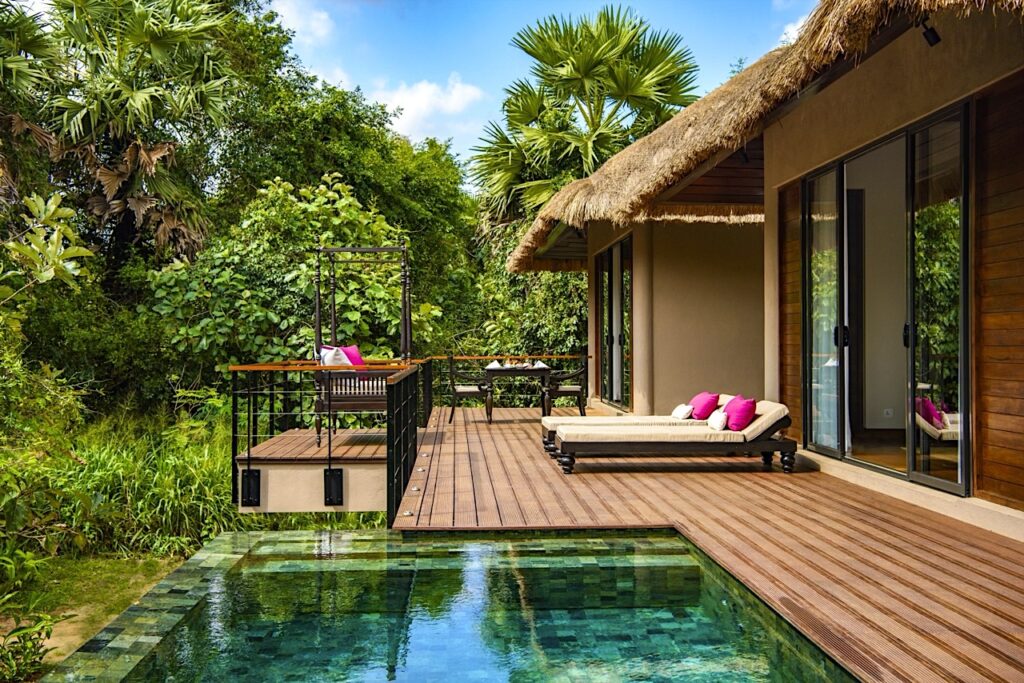
Accommodation in the Cultural Triangle ranges from architectural landmarks to peaceful eco-retreats, each offering easy access to major sites.
- Uga Ulagalla – A luxurious boutique retreat near Anuradhapura, combining heritage-style villas with private plunge pools and eco-friendly design.
- Water Garden Sigiriya – A stylish and secluded resort featuring villa-style accommodation, private plunge pools, and direct views of Sigiriya Rock — perfect for couples or honeymooners.
- Athena Lake, Dambulla – A peaceful lakeside hotel offering comfortable rooms and easy access to both Dambulla and Sigiriya, ideal for relaxed touring.
- Habarana Village by Cinnamon – A long-established favourite surrounded by nature, offering authentic charm and proximity to Minneriya and Kaudulla National Parks.
- Adigar’s Manor, Kandy – Though slightly south of the Cultural Triangle, this elegant colonial-style residence makes a comfortable stop en route to or from Kandy’s cultural sites.
- The Wallawwa – Located near Colombo Airport, this chic boutique hotel is ideal for pre- or post-tour stays when visiting the Cultural Triangle as part of a longer Sri Lanka itinerary.

Discover the Heart of Ancient Sri Lanka
Exploring Sri Lanka’s Cultural Triangle is a journey through more than 2,000 years of art, architecture and spiritual heritage. From ancient capitals and sacred temples to dramatic rock fortresses, this storied region forms the historic heart of the island — peaceful, powerful and deeply atmospheric.
At Swift Travel, we design tailor-made Cultural Triangle journeys, often combining these cultural highlights with nearby wildlife experiences and a contrasting beach stay elsewhere on the island, for a balanced and immersive Sri Lanka adventure.
Itinerary Inspiration
Browse some of our suggested itineraries below, but there is little we cannot do, so to start planning your bespoke trip get in touch.
Travel more, Travel better.
Call us now on 020 8502 8300 and one of our team would be happy to help start planning your personalised holiday itinerary.
Alternatively, click below to send us a message or request a call back.